Bōshu(芒種)
 xs462828
One of Japan's 24 Seasonal Divisions
Bōshu (芒種) is one of the 24 seasonal divisions (Sekki) in the traditional Japanese calendar.
It usually falls between June 5 and June 20, when rice planting begins across Japan and the rainy season gradually approaches.
Flooded rice fields reflect the sky, young rice plants sway in the wind, and hydrangeas begin to bloom along country roads.
It is a season that quietly marks the beginning of summer.
The Three Micro-Seasons of Bōshu
In Japan's traditional calendar, each of the 24 seasonal divisions is further divided into three micro-seasons known as Shichijūni-kō.
Bōshu includes the following three micro-seasons:
- Mantis Hatching (Tōrō Shōzu)
- Fireflies Rise from the Grass (Fusō Hotaru to Naru)
- Ripening Plums (Ume no Mi Kibamu)
Each lasts only a few days, capturing subtle changes in nature during early summer.
Featured Artwork

About This Artwork
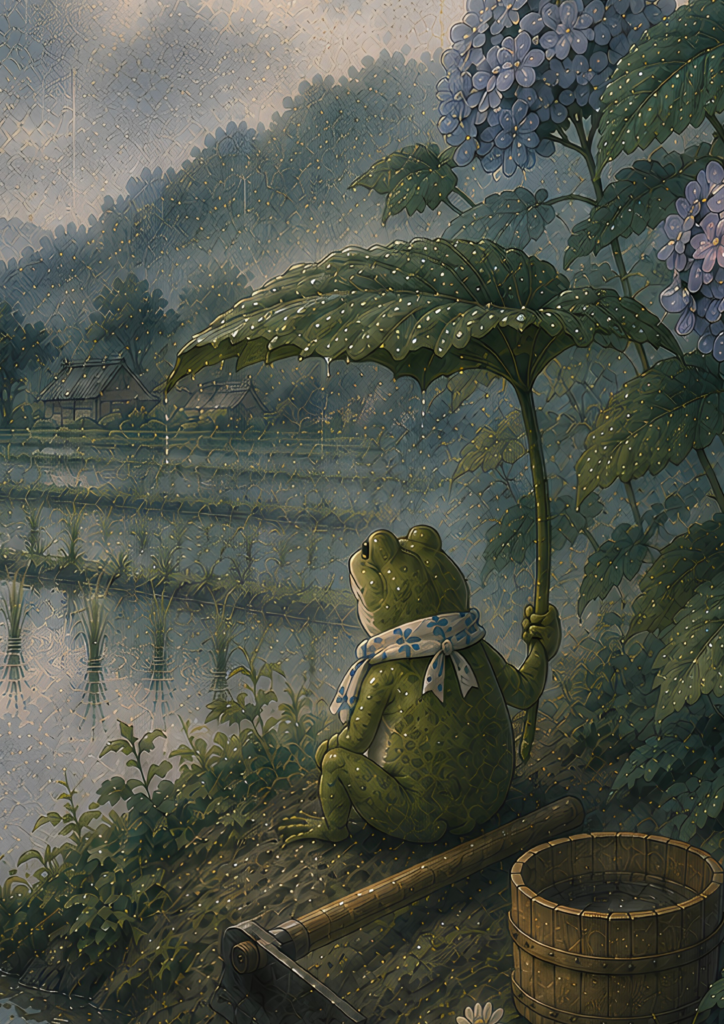
This artwork was inspired by the quiet beauty of Japan's rice-planting season.
During Bōshu, flooded paddies reflect the sky like mirrors, creating a landscape where the boundary between earth and heaven seems to disappear.
Young rice plants appear delicate, yet they already carry the promise of a rich harvest to come.
The artwork was created to capture that brief moment when spring gently gives way to summer.
About Japan's 72 Seasons
Japan traditionally divides the year into 24 seasonal divisions called Sekki.
Each of these is further divided into three micro-seasons, creating the 72 Seasons of Japan (Shichijūni-kō).
Each season lasts only a few days and reflects subtle changes in nature, from blooming flowers to emerging insects and ripening fruits.
This artwork is inspired by one of these beautiful seasonal moments.
Explore More Seasons →