A Quiet Journey West: Discovering the Floating Torii of Itsukushima Shrine
 xs462828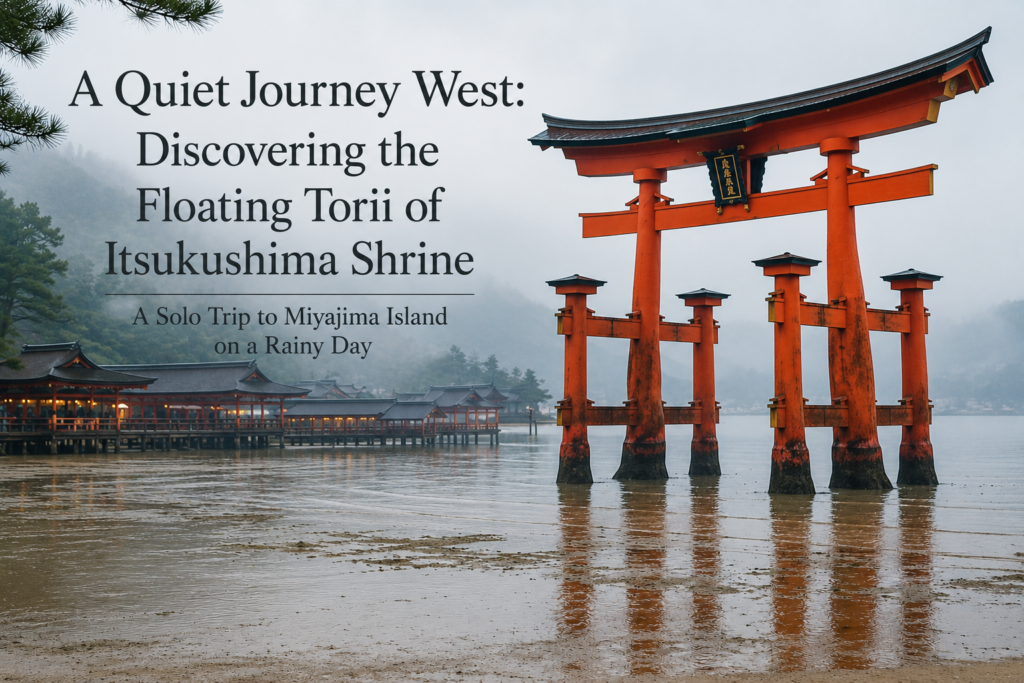
On June 24, I set out on a quiet journey to Miyajima Island, home to the famous Itsukushima Shrine, a UNESCO World Heritage Site.
The day happened to be Tsuchinoto-Mi no Hi, a traditional day in the Japanese calendar that comes once every sixty days. It is considered an especially fortunate time, often associated with Benzaiten, the goddess of water, music, knowledge, and prosperity.
For me, it was also a day when traveling west felt particularly meaningful.
So I boarded an early morning Shinkansen and headed toward Hiroshima.
A Solo Trip, Once Again
This time, my husband had to work, so I found myself traveling alone for the first time in quite a while.
Before boarding the train, I stopped at a convenience store and noticed a rice ball featuring a collaboration with a local morning TV show. It even came with a tiny fortune.
I couldn't resist.
The result?
"Good luck with money."
A small smile appeared before the journey had even begun.
Outside, however, heavy rain was falling.
The forecast had been right, but I hadn't expected it to feel so cold. My light jacket was no match for the damp wind.
Travel rarely unfolds exactly as planned.
Yet those unexpected moments often become the memories that stay with us the longest.
A Shrine That Rises from the Sea
The JR ferry to Miyajima takes only about ten minutes.
It is a short crossing, but the route is carefully planned so passengers can enjoy a front-facing view of the island's famous vermilion torii gate.
As it slowly emerged across the water, I found myself quietly watching.
This was my second visit, but the feeling was no less special.
Itsukushima Shrine was originally built over the sea more than a thousand years ago. In 1168, the military leader Taira no Kiyomori transformed it into the elegant shrine complex we see today, inspired by the architectural style of the imperial court.
Its remarkable setting—appearing to float above the water—has made it one of Japan's most beloved landscapes, and in 1996 it was recognized as a UNESCO World Heritage Site.
Standing there, it is easy to understand why people travel from around the world to see it.
The Secret of the Great Torii
As I stood on the ferry deck, an announcement came over the speakers.
It shared something I had never known.
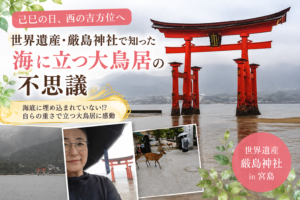
The enormous torii gate is not anchored deep into the seabed.
Instead, it stands entirely under its own weight.
I couldn't help thinking,
"Really?"
The gate rises about 16 meters (52 feet) high and weighs roughly 60 tons.
Strong winds come.
High tides come.
Storms come.
And yet it has remained standing here for centuries.
Suddenly, I wasn't only admiring its beauty.
I was quietly impressed by its strength.
A Different View at Low Tide
The last time I visited, the tide was high.
This time, the sea had pulled away.
The same place looked completely different.
The base of the giant torii was exposed, inviting visitors to walk all the way up to it.
"I have to go closer," I thought.
Rain fell steadily as I walked toward the shrine.
Along the path, Miyajima's famous deer greeted visitors with calm curiosity.
For centuries, these deer have been regarded as sacred messengers of the gods.
One gently nudged my bag with its nose.
"I'm sorry," I whispered.
"I don't have anything for you today."
It felt like a small conversation shared only between the two of us.
Near the gate, puddles covered the ground, making every step a little slower.
But perhaps because of the rain, the sea and the gray sky blended together into a soft, dreamlike landscape.
Sometimes rainy days reveal a beauty that sunshine cannot.
The Quiet Joy of Traveling
People sometimes imagine that a "lucky journey" should include special rituals or extraordinary experiences.
I don't think it has to.
Breathing the air of a new place.
Standing quietly before a shrine.
Listening to the sound of the sea.
Learning one small piece of history you didn't know before.
That feels more than enough.
If I hadn't listened to the ferry announcement, I might never have learned that the great torii stands by its own weight.
Travel is not only about seeing beautiful places.
It is also about discovering stories that quietly change the way we see them.
Traveling alone made that even easier.
There was no schedule to keep, no conversation to rush.
I could stop whenever something caught my attention, listen carefully, and simply enjoy the moment.
Perhaps that quiet freedom was the greatest souvenir I brought home.
In my next story, I'd love to share more of Itsukushima Shrine itself—the beautiful shrine buildings, my goshuin (a traditional calligraphy stamp received at shrines and temples), and the peaceful scenery that only a rainy day on Miyajima can offer.