Sowing Seeds in the Rain: What Japan’s Grain-in-Ear Season Teaches About Beginning Something New
 xs462828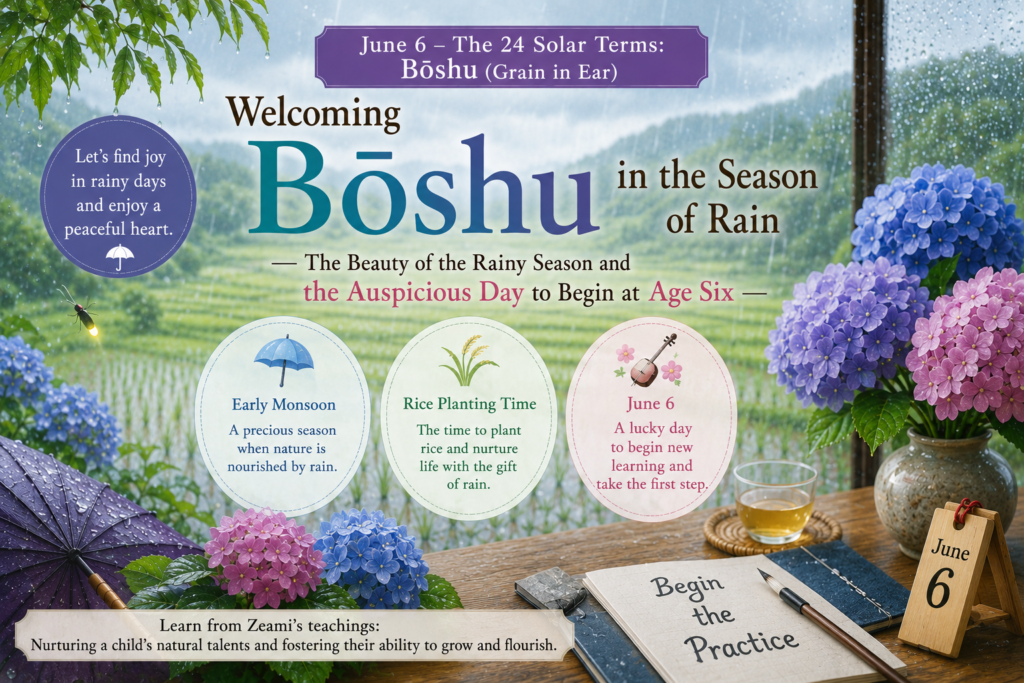
The rainy season arrived in western Japan this week.
The sky has been gray since morning, and the air feels heavy with moisture. Laundry takes longer to dry, hair refuses to cooperate, and even our bodies seem to move a little more slowly.
Every year, when this season returns, I find myself thinking:
"Ah, here it comes again."
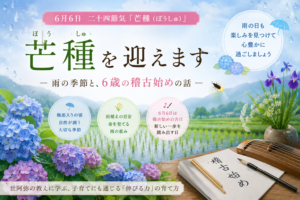
And yet, tomorrow, June 6, marks the arrival of Bōshu (Grain in Ear), one of the 24 seasonal divisions of the traditional Japanese calendar.
It is a quiet reminder that beneath the rain, life is growing.
What Is Bōshu?
Bōshu is the ninth of Japan's 24 solar terms, a traditional calendar system that divides the year according to changes in nature.
It usually falls between June 5 and June 20.
The word bō refers to the fine bristles found on grains such as rice and wheat. Traditionally, Bōshu was considered the season for sowing seeds and transplanting rice seedlings.
For centuries, farmers used this period as an important guide for agricultural work.
Today, farming schedules vary by region and technology has transformed much of the work. Yet when I see rice paddies filled with water and young green shoots swaying in the wind, I still feel the same thing:
Summer is on its way.
Rain Can Be Inconvenient—But It Sustains Life
Bōshu arrives just as Japan enters the rainy season, known as tsuyu.
The rain today often feels different from the gentle, steady showers of the past. Sometimes it falls in sudden torrents, more like a tropical downpour than a quiet drizzle.
These days, preparing for extreme weather has become part of life.
Yet rain remains something we depend upon.
It fills rivers, nourishes vegetables, supplies rice fields, and ultimately becomes the water we drink.
Because it is so ordinary, it's easy to forget that nearly every form of life on Earth depends on rain.
Rainy days can make us feel a little gloomy.
But this is also the season when hydrangeas bloom in shades of blue, purple, and pink. In the evenings, the first fireflies begin to appear.
There are landscapes that can only be seen in the rain.
Remembering that makes rainy days feel a little more precious.
An Old Tradition About Beginning Lessons
While reading about Bōshu, I came across an old Japanese saying that made me smile.
It says:
"If a child begins lessons on June 6 at the age of six, they will improve quickly."
Even today, June 6 is associated with learning and practice. It is known in Japan as a day connected to music, traditional arts, calligraphy, flower arranging, and other forms of study.
One explanation comes from an old folk belief.
When counting on your fingers, the little finger rises when you reach six.
People once saw this as a symbol of a child "standing up" and growing.
It is the kind of charming symbolism that appears often in Japanese traditions.
A Surprisingly Modern Lesson From 600 Years Ago
As I continued researching, I discovered that this custom is often linked to Zeami, the great master who perfected Noh theater in the 14th and 15th centuries.
In his famous treatise Fūshikaden (The Transmission of the Flower Through Style), he wrote that the study of an art should begin around the age of seven in the traditional counting system.
What surprised me wasn't the age itself.
It was his advice about children.
Zeami suggested that adults should pay attention to what children naturally enjoy and do well. Rather than correcting them constantly or forcing them into rigid forms, he encouraged nurturing their curiosity and delight.
Reading those words, I couldn't help thinking:
Was this really written six hundred years ago?
It sounds remarkably similar to modern parenting advice.
We often feel tempted to say:
"Do it properly."
"That's not right."
"You should do it this way."
Teaching certainly matters.
But too much correction can extinguish the simple desire to try.
Perhaps Zeami understood that.
Maybe This Applies to Adults Too
The more I thought about it, the more I felt that this wisdom isn't only for children.
Adults often tell themselves:
"It's too late to start now."
"I'm probably not suited for that."
"Younger people would be much better at it."
And so we give up before we begin.
Yet Zeami's words remind me of something simple:
We continue because we enjoy something.
And because we continue, we grow.
New Seeds at Any Age
After working as a nurse for more than thirty-five years, I eventually began a completely new chapter of life as a fortune-telling consultant.
Since then, I've learned how to build a website, write newsletters, and publish essays online.
As I approach sixty, I'm still learning new things.
If my younger self could see me now, she might ask,
"What exactly are you doing?"
And honestly, I would laugh.
But perhaps that is exactly the point.
Life allows us to plant new seeds at almost any age.
The Season of Sowing
Traditionally, Bōshu is the season for planting seeds in fields and rice paddies.
But in our daily lives, sowing can take many forms.
Starting a new hobby.
Reading a book you've been curious about.
Taking a class.
Researching a topic that interests you.
Making time to visit someone you've wanted to meet.
These, too, are seeds.
The sprouts may not appear immediately.
But without planting, nothing can grow.
Rain falls.
The soil softens.
Roots quietly begin their work beneath the surface.
Watching nature move at its own pace reminds me that there is no need to rush.
Closing Thoughts
The rainy season has begun.
It brings inconvenience, certainly.
Yet because of the rain, hydrangeas bloom beautifully, rice fields are nourished, and autumn eventually brings its harvest.
Bōshu is the season of sowing.
If there is something you've been quietly thinking about lately—something that makes you say,
"Maybe I'd like to try that."
Hold on to that feeling.
A small seed planted today may become an unexpected harvest months or even years from now.
As I listened to the sound of rain outside my window on the eve of Bōshu, that was the thought that stayed with me.
🌾☔