From Shrine to Temple: The Mystery of Benzaiten on Miyajima
 xs462828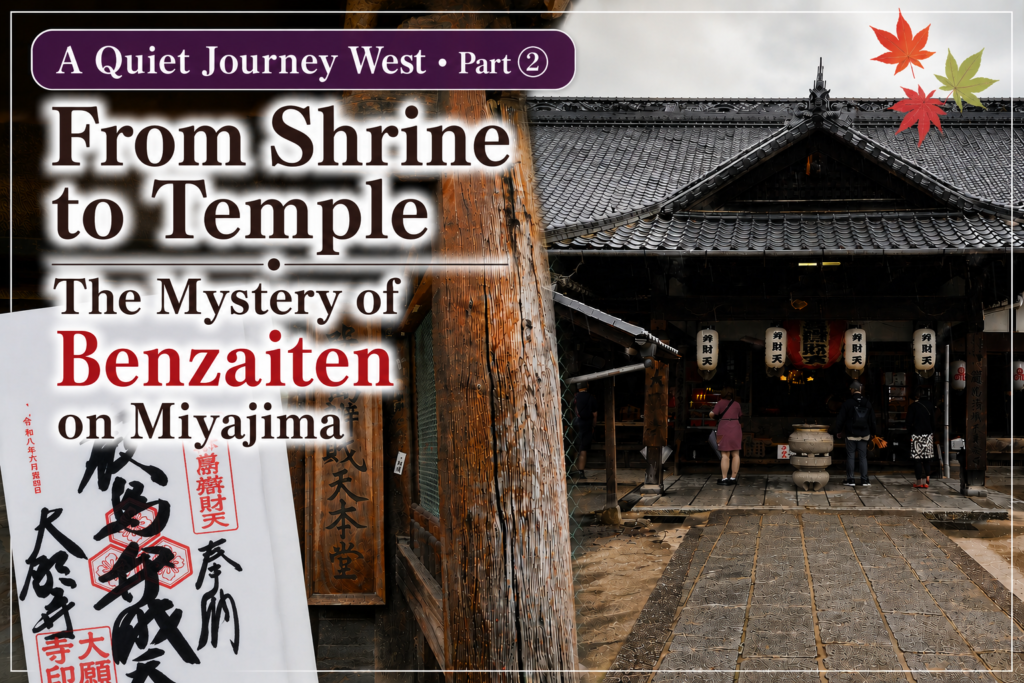
In my previous story, I shared my rainy-day journey to Itsukushima Shrine on Miyajima Island during Tsuchinoto-Mi no Hi, a traditional day in the Japanese calendar that comes once every sixty days.
That visit began with the famous floating torii gate.
This time, I'd like to share something unexpected—one simple question that quietly changed the way I understood Japanese history.
Walking Through Itsukushima Shrine in the Rain
After visiting the great torii at low tide, I finally entered Itsukushima Shrine.
The rain had never really stopped.
Yet perhaps because of it, the shrine's vermilion corridors seemed even more brilliant against the gray sky.
The sound of footsteps echoed softly across the wooden floors.
A cool breeze drifted in from the sea.
Although many visitors were there that day, everything somehow felt calm.
When people think of a World Heritage Site, they often imagine historic buildings or famous landmarks.
But walking through the shrine, I realized that its greatest beauty wasn't only what I could see—it was the quiet atmosphere that surrounded it.
After offering my prayers and receiving a goshuin—a beautiful hand-written calligraphy stamp given at Japanese shrines and temples—I slowly made my way toward the exit.
Then something caught my attention.
"Wait... Where Is Benzaiten?"
One reason I had chosen Miyajima was because Tsuchinoto-Mi no Hi is traditionally associated with Benzaiten, the Japanese goddess connected with water, music, wisdom, and prosperity.
Itsukushima is often introduced as one of Japan's Three Great Benzaiten Sacred Sites.
So naturally, I expected to find Benzaiten enshrined there.
But when I looked at the shrine's official deities, I found something different.
The main deity is Ichikishimahime-no-Mikoto, one of the three Munakata goddesses from Japan's ancient Shinto tradition.
I paused.
"Wasn't this supposed to be Benzaiten?"
As I continued walking through the red corridors, another surprise appeared.
Just outside the shrine stood a Buddhist temple with a large sign that simply read:
Benzaiten.
Now I was completely curious.
When Shinto and Buddhism Were One
Back home, I started reading.
That's when I learned about an important chapter in Japanese history called Shinbutsu Shūgō.
For many centuries, Japan did not separate Shinto and Buddhism.
Instead, the two traditions blended naturally together.
People often saw Shinto deities and Buddhist figures as different expressions of the same sacred presence.
Within this tradition, Ichikishimahime-no-Mikoto gradually came to be identified with Benzaiten.
To people living hundreds of years ago, these were not competing figures.
They were simply different names for a similar divine presence.
Learning this made everything suddenly feel much clearer.
Why the Shrine and the Temple Are Different Today
Things changed during the Meiji Era in the late nineteenth century.
The Japanese government introduced a policy that officially separated Shinto shrines from Buddhist temples.
As a result, many places of worship had to divide traditions that had existed together for centuries.
At Itsukushima, the Buddhist image of Benzaiten, which had once been housed inside the shrine itself, was moved to the neighboring Daiganji Temple.
Today, the two places preserve different parts of that shared history.
At Itsukushima Shrine, visitors worship Ichikishimahime-no-Mikoto.
At Daiganji Temple, they worship Itsukushima Benzaiten, one of Japan's Three Great Benzaiten.
Suddenly, the pieces fit together.
A Goshuin That Meant More Than I Realized
I remembered the goshuin I had received at Daiganji Temple.
Written across it were the words:
"One of Japan's Three Great Benzaiten."
At the time, I had simply thought,
"That's nice to know."
But after learning the history, those words carried much deeper meaning.
A goshuin is often seen as a souvenir of a pilgrimage.
Perhaps it is also a small reminder of the stories hidden behind the places we visit.
The Joy of Asking "Why?"
I've always been the kind of person who can't leave a question unanswered.
Whenever something makes me wonder,
"Why?"
I find myself wanting to learn more.
This trip reminded me that travel isn't only about beautiful scenery or famous destinations.
Sometimes, one small question opens the door to an entire chapter of history.
I had come to Miyajima hoping to visit one of Japan's Three Great Benzaiten sites.
Looking back, I realized I had.
I prayed quietly at Itsukushima Shrine.
I prayed again at Daiganji Temple.
Without fully understanding it at the time, I had experienced both sides of a tradition that had lived together for centuries.
That realization became one of the most meaningful moments of my journey.
Beautiful landscapes make us stop.
Good food gives us happy memories.
But learning the stories that live beneath a place makes travel stay with us long after we return home.
Next Time
My Miyajima journey is almost complete.
In the final story, I'd love to share the quieter joys of the island—encounters with its gentle deer, local food, and the small discoveries that made this rainy journey unforgettable.