Two Consecutive "Lucky Seed Days" in Japan — A Quiet Time to Begin Something Small
 xs462828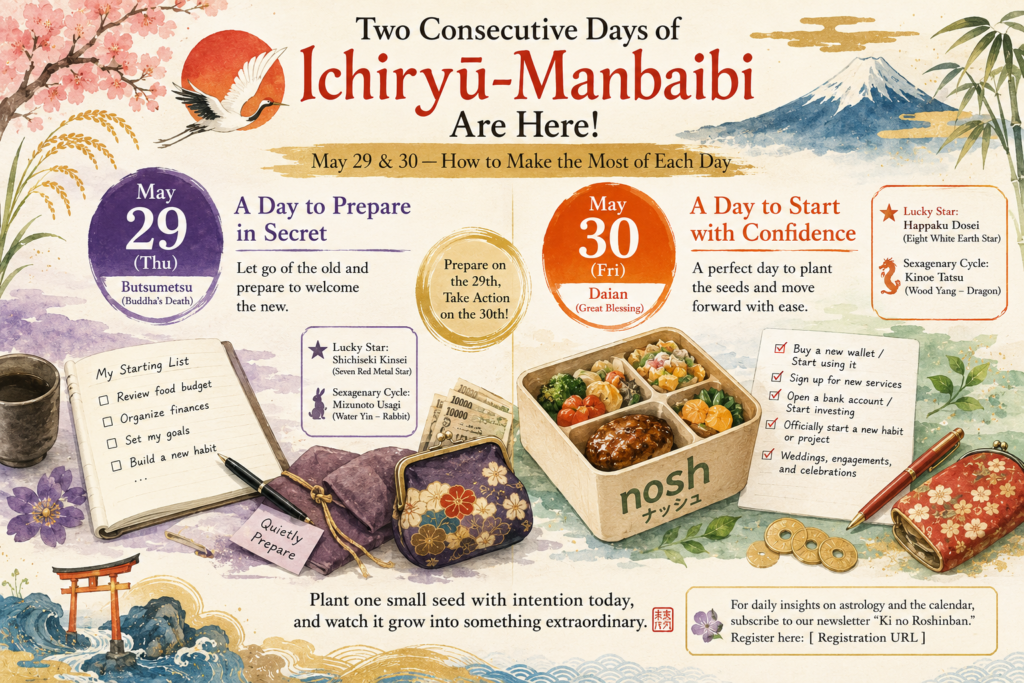
Starting next month, I decided to try a Japanese meal delivery service called Nosh.
It delivers frozen prepared meals to your home.
I'll still cook on weekends, but during busy weekdays,
I thought it might be nice to let someone else handle part of the work for a while.
Along with that, I've been wanting to organize my pantry a little better
and keep a closer eye on our food budget.
Just the thought of "putting my food life in order" somehow makes my mind feel clearer.
And then I realized — maybe the timing is perfect.
━━━━━━━━━━━━━━━━
What Is Ichiryū Manbaibi?
In Japan, there is an old calendar tradition called Ichiryū Manbaibi (一粒万倍日).
The phrase literally means, "One grain becomes ten thousand."
It comes from the image of a single rice seed growing into countless ears of rice.
Because of that symbolism, it is considered a fortunate day to begin something small
that you hope will grow steadily over time.
People often choose these days to start a new habit, open a bank account,
use a new wallet for the first time, begin a business, or make an important purchase.
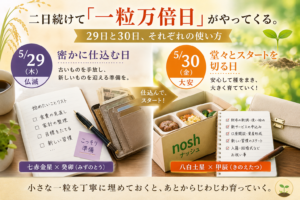
This year, two Ichiryū Manbaibi days arrive back-to-back: May 29 and May 30.
And interestingly, each carries a slightly different mood.
━━━━━━━━━━━━━━━━
May 29 — A Quiet Day for Preparation
The first day overlaps with Butsumetsu, a traditional calendar label often considered unlucky.
Some people say that this weakens the good fortune of Ichiryū Manbaibi.
But originally, Butsumetsu also carried the meaning of
"something ending so that something new may begin."
I prefer to think of it that way.
Not as a bad day — but as a day for letting go.
A day for clearing space before planting new seeds.
In traditional Japanese astrology, the energy of the day is connected with themes of
relationships, money, enjoyment, and growth.
But rather than making a loud announcement or dramatic change,
this day feels better suited for quiet preparation.
A few gentle ways to spend the day:
· Write down goals or ideas in a journal
· Begin researching something privately
· Review your household budget or spending habits
· Organize your wallet or financial papers
· Let go of old routines that no longer fit your life
It feels less like "launch day" and more like preparing the soil before planting.
━━━━━━━━━━━━━━━━
May 30 — A Strong Day to Begin
The next day overlaps with Taian (大安), considered the luckiest day
in the traditional Japanese calendar.
Taian means something like "great peace" or "great ease."
It is believed to be a day when things move forward smoothly and without obstacles.
Combined with Ichiryū Manbaibi, it creates a feeling of
confidently planting seeds into good earth.
The day is associated with steady growth, trust, stability, and building something lasting —
not overnight success, but the kind that quietly accumulates over time.
This is the kind of day people choose for:
· Starting a new service or subscription
· Using a new wallet for the first time
· Opening a savings or investment account
· Beginning a new habit or project officially
· Weddings or celebrations
If May 29 is the day to prepare quietly, then May 30 feels like the day to step forward openly.
I'm thinking of signing up for my meal delivery service on the 30th.
There's something oddly comforting about beginning a healthier food routine
on a "lucky seed day."
It feels small, but somehow meaningful.
━━━━━━━━━━━━━━━━
Is there something you've been wanting to begin lately?
It doesn't have to be dramatic.
Organizing your kitchen.
Tracking your spending.
Taking better care of your body.
Writing one page a day.
Going to bed a little earlier.
In Japan's old seasonal calendar, even tiny actions are treated with care.
A single seed, planted at the right moment, is believed to grow quietly over time.
And honestly, I think everyday life works that way too.
━━━━━━━━━━━━━━━━