When Summer Begins to Turn: Japan’s Quiet Tradition of the Doyō Season
 xs462828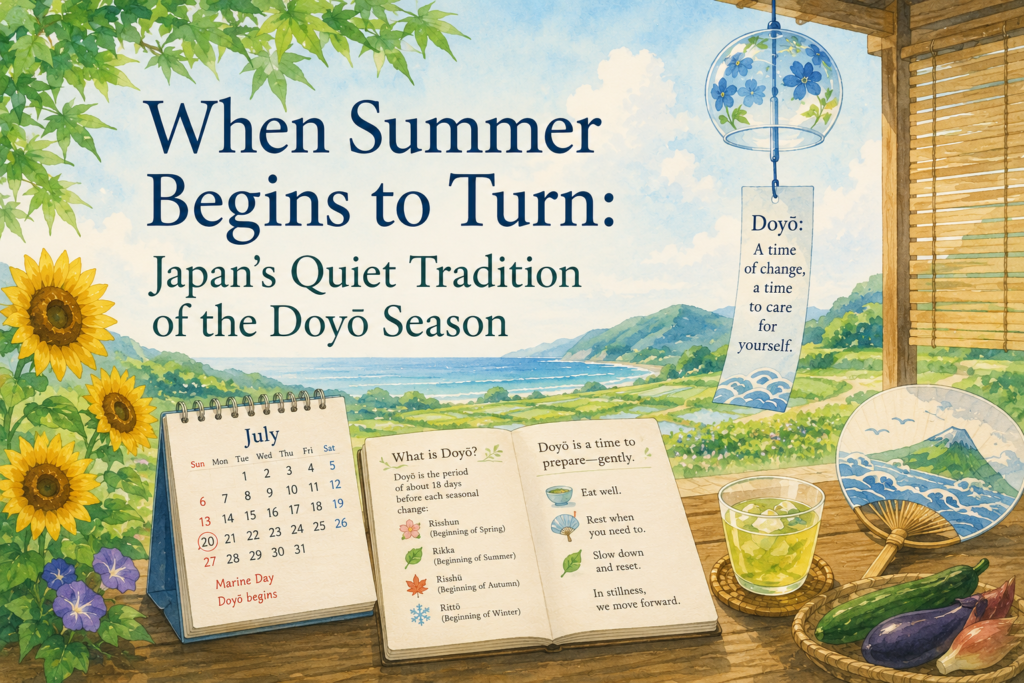
July 20 is Marine Day in Japan, a national holiday that celebrates the sea.
For many people, it also feels like the true beginning of summer—long sunny days, family trips, festivals, and the sound of cicadas filling the air.
Yet according to Japan's traditional calendar, another quiet milestone arrives on the very same day.
It is the beginning of summer Doyō.
If you've heard the word Doyō before, it was probably in connection with the Day of the Ox, when many Japanese people eat grilled eel (unagi) to help endure the summer heat.
But Doyō is much more than a day—or a meal.
In the old calendar, there are four Doyō periods each year.
Each lasts about eighteen days and falls just before the arrival of a new season: spring, summer, autumn, and winter.
The Doyō beginning now is the one that comes before Risshū, the first day of autumn, which usually arrives around August 7.
Of course, if you step outside, it still feels unmistakably like midsummer.
The sun is intense.
The air is heavy with heat.
Autumn seems impossibly far away.
Yet the people of old Japan believed that seasons begin to change long before our eyes notice them.
Even while summer is at its peak, nature is already preparing for what comes next.
Perhaps we are not so different.
Seasonal transitions can quietly leave us feeling tired without realizing it.
Our bodies slow down.
Our minds ask for a little more rest.
That is why Doyō has long been seen not as a time to push harder, but as a gentle invitation to prepare for the next season.
Eat nourishing meals.
Sleep well.
Don't ask too much of yourself.
These simple acts may be the most meaningful way to care for yourself.
One of the things I enjoy about Japan's traditional calendar is that it gently changes the questions I ask each day.
Instead of only wondering, "What day is it today?"
I find myself asking,
"Where is the season quietly heading now?"
When you begin to notice that subtle flow, even an ordinary summer day can feel a little richer—and a little more peaceful.