For 16 Days, You Can Forget About Directions: A Quiet Summer Tradition in Japan's Old Calendar
 xs462828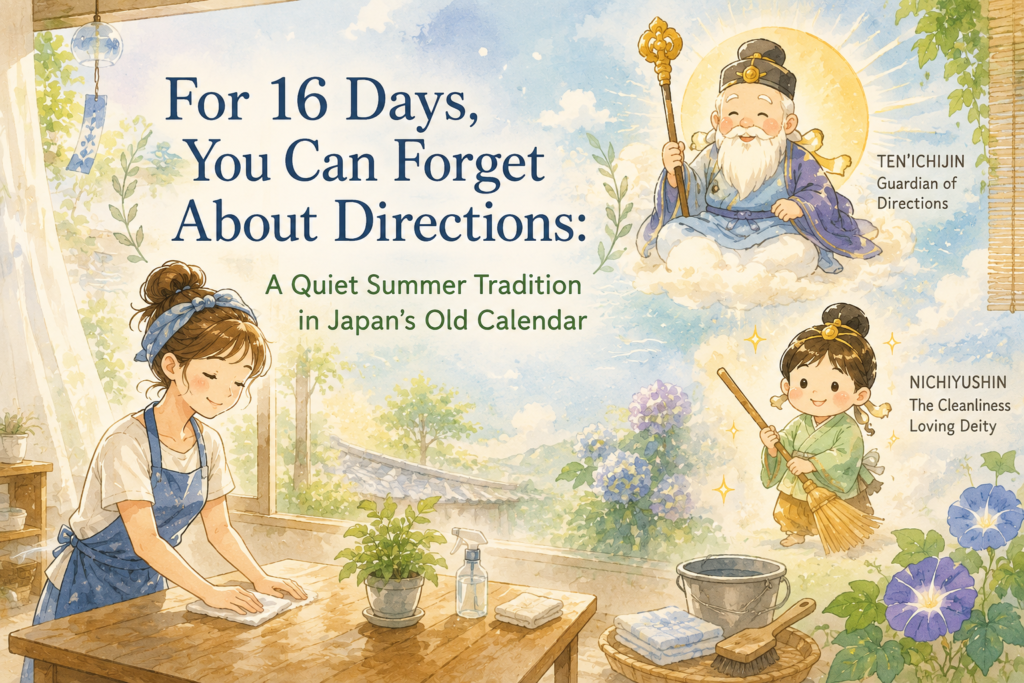
The heat of summer has truly arrived in Japan.
Early in the morning, a gentle breeze still lingers. But once the sun climbs higher, simply stepping outside is enough to make you break into a sweat.
Around this time of year, Japan's traditional calendar marks a little-known period called Ten'ichi Tenjō (天一天上).
It isn't a festival, and many Japanese today have never heard of it. Yet it is one of the many seasonal traditions that quietly shaped everyday life for centuries.
According to old belief, Ten'ichi Tenjō is a sixteen-day period when Ten'ichijin, the deity who watches over directions, returns to the heavens.
During these days, people traditionally worry less about whether a direction is lucky or unlucky.
For those who follow the old calendar, it becomes a gentle invitation to travel, move house, or simply go where they need to go without overthinking which way to face.
It feels like the calendar itself is saying:
"You can relax for a little while."
But that doesn't mean the earth is left without company.
While Ten'ichijin is away, another deity called Nichiyūshin (日遊神) is said to wander through the world instead.
Nichiyūshin has an unusual reputation.
Rather than watching over directions, this deity is known for loving cleanliness.
Because of that, people have long said that this is an ideal time to tidy the house, sweep away dust, and freshen the spaces where daily life unfolds.
Every year, when I remember this old tradition, I tell myself that I should give the kitchen and bathroom a little extra care.
Of course, this is also the hottest part of summer.
Even if I begin cleaning in the cool hours after sunrise, by the time I'm finished, my clothes are soaked with sweat.
The morning usually ends with an unexpected shower.
And somehow, I never mind.
Standing in a freshly cleaned kitchen or looking at a sparkling sink, I always feel as though my mind has become lighter too.
Japan's traditional calendar is about more than seasons.
It also offers gentle rhythms for everyday living.
"Today belongs to this deity."
"Perhaps today is a good day to care for your home."
Small ideas like these give us a reason to pause, even during the busiest weeks of the year.
You don't have to believe every old tradition exactly as people once did.
But when you let these quiet customs accompany ordinary tasks, even cleaning begins to feel less like a chore and more like a small seasonal ritual.
Outside, the summer sun is relentless.
Inside, a tidy room lets a quiet breeze pass through the heart.
Perhaps that is one of the enduring gifts hidden within Japan's old calendar—not rules to follow, but gentle reminders to live with the seasons, one ordinary day at a time.